
What Causes Paint Protection Film Adhesive to Fail?
Lifting corners, peeling edges, and persistent bubbles can undermine the appearance of an otherwise well-protected vehicle. At The Works Auto Center, we understand that PPF adhesive failure can develop for several different reasons. Surface contamination, paint condition, application technique, temperature exposure, and material aging can all affect how film bonds to a panel. In Albany, NY, winter road grime and seasonal temperature changes make adhesion concerns especially relevant. We also explain how professional installation and proper maintenance help reduce preventable adhesion problems. Timing helps us assess the issue.
What Causes PPF Adhesive Failure?
PPF adhesive failure occurs when film loses the consistent contact needed to stay secured against painted surfaces. We distinguish problems present immediately after installation from adhesion that weakens months or years later. Residual wax, improperly prepared paint, tension around a curve, or contamination along an edge may interfere with the initial bond. Older film can instead show changes related to weather exposure and aging materials.
We avoid assuming that every visible bubble means the adhesive has failed. Fresh installations can retain temporary application moisture, so the timing and location of changes matter when assessing concerns.
How Does Improper Surface Preparation Cause PPF Adhesive Failure?
We treat surface preparation as a fundamental part of our PPF installation work in Albany, NY. Adhesive needs a clean, stable painted surface. Our preparation includes a signature hand wash, decontamination, appropriate paint correction, and panel wipe-down.
Inadequate Cleaning Before Installation
Road grime, grease, wax, and polishing residue may leave a barrier between the adhesive and the vehicle's finish. We focus on removing these deposits so the film can make even contact rather than trapping contamination beneath it.
Applying Film Over Unstable Paint
We also consider the condition of factory and repainted surfaces. Peeling clear coat, poorly bonded refinishing layers, or paint that has not fully cured may be unsuitable for immediate application.
Why Final Surface Inspection Matters
Before fitting film, we examine areas where residue or surface irregularities may remain. Early inspection helps us decide whether more preparation is needed.
How Can Trapped Dirt, Moisture, and Other Contaminants Affect PPF Adhesion?
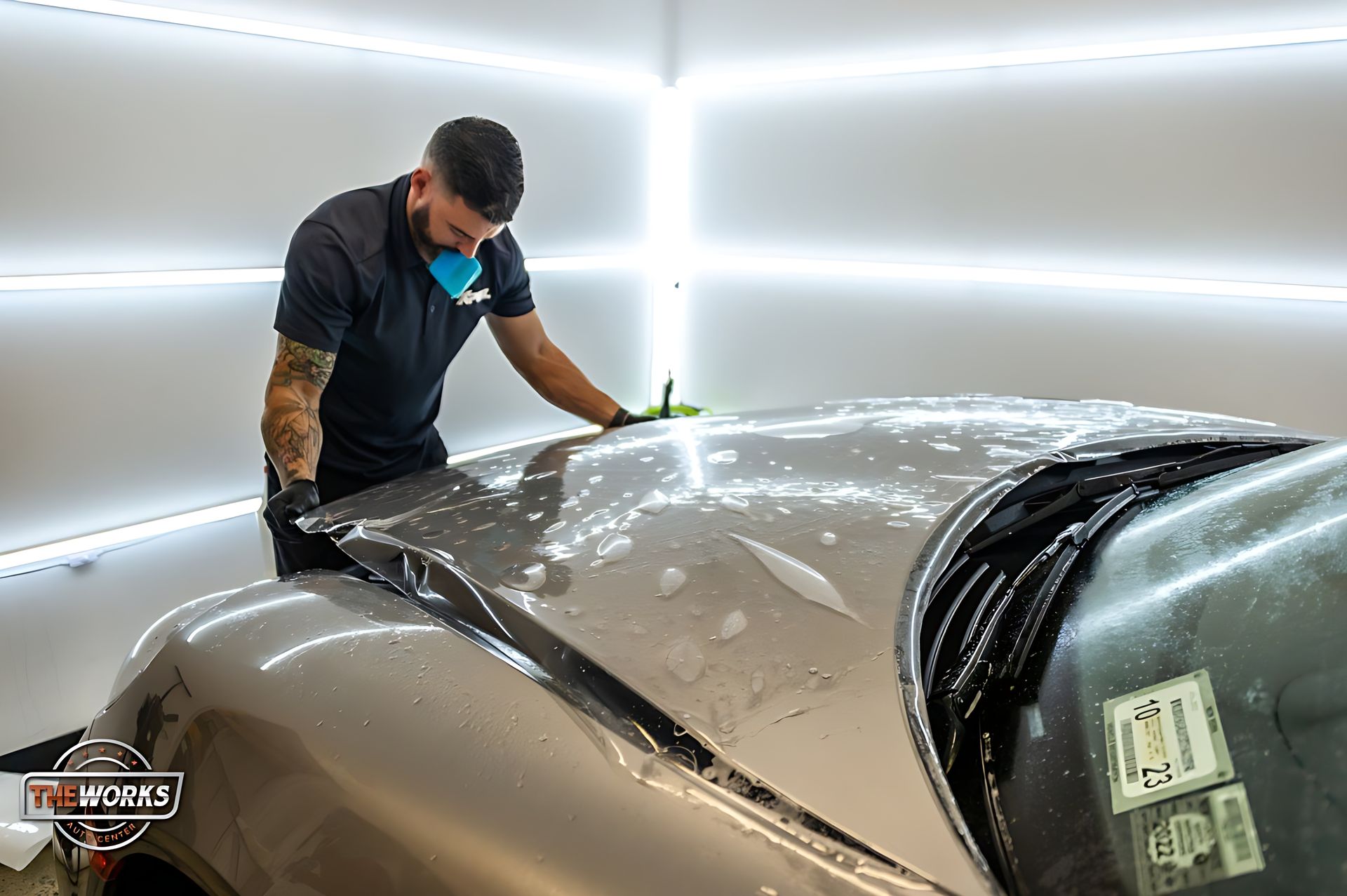
Even after washing, small particles can remain in difficult-to-reach areas. If dust or dirt becomes trapped under the film, it may create a raised point that prevents uniform contact. Oils or leftover products can similarly leave localized weak spots. We also check edges where contamination can contribute to lifting. Once an edge rises, additional moisture or road residue may reach the adhesive and worsen separation.
Application moisture deserves a different explanation. Positioning solution may remain temporarily as the adhesive settles. A small water pocket immediately after installation does not automatically signal failure. Persistent contamination, growing bubbles, or edges that continue separating after curing are different concerns. We recommend professional evaluation rather than repeated pressing or rubbing that could make the problem worse.
Can Incorrect Installation Techniques Cause PPF to Lift or Peel?
Careful fitting matters because vehicle panels include tight curves, complex contours, and narrow edges. When film is stretched excessively or positioned under unnecessary tension, portions may try to pull back as the material relaxes. Inadequate solution removal or poorly finished edges can also leave areas vulnerable to lifting.
At The Works Auto Center, our certified XPEL installation team uses precision cutting, fitting, application, trimming, and drying steps. These practices help us manage the shape of each panel and support consistent contact. Professional installation reduces preventable problems but cannot eliminate all risks.
Why Does Proper Curing Matter After PPF Installation?
Newly applied film needs time to settle against painted panels. During installation, solution assists with alignment, and some moisture may remain beneath the material afterward. As that moisture dissipates, the adhesive continues developing contact with the finish. Early haze or small water pockets can therefore be normal.
We recognize that curing is influenced by temperature, humidity, and film characteristics. Albany, NY, experiences conditions that change considerably throughout the year, so we do not apply one rigid drying timeline to every vehicle. Premature washing, picking at edges, or trying to flatten moisture pockets can disturb a fresh installation. We recommend leaving the film undisturbed and monitoring whether temporary effects improve. We explain the process further in our PPF settling guide.
Can Excessive Heat and Temperature Changes Weaken PPF Adhesion?
Automotive film is made for outdoor use, so normal sunlight alone does not mean an adhesive bond is failing. Still, repeated heating and cooling can place stress on film and painted panels as materials expand and contract. Edges installed under excess tension may be more susceptible to separation under those conditions.
We consider Albany's seasonal temperatures when discussing PPF care. Excessive heat from unsuitable tools or improper handling can also create unnecessary risks. We rely on appropriate installation methods and film materials rather than treating extreme heat as a shortcut to bonding. We therefore assess installation conditions and film condition before attributing adhesion problems to weather exposure.
How Do Aging and Poor Film Quality Contribute to Adhesive Failure?
Adhesive materials change over time, particularly after years of exposure to sunlight, moisture, washing, and temperature variations. We recognize that older film may show peeling edges, cloudiness, cracking, or other signs that it no longer performs as intended. Lower-quality materials may also deteriorate earlier than properly installed, reputable products, although film quality is not the only factor in service life.
At The Works Auto Center, we install XPEL paint protection film and emphasize trained application. If existing film shows widespread deterioration, we consider whether replacement offers a more appropriate solution than attempting to preserve a failing installation.
What Are the Warning Signs of PPF Adhesive Failure?
We look for changes that persist or spread rather than relying on an isolated early moisture pocket. These warning signs help us identify film that may need professional evaluation.
Lifting and Peeling Around Film Edges
An edge that separates repeatedly may allow road dirt and moisture beneath the film. We take persistent lifting around corners, seams, and exposed boundaries seriously because contamination can make the affected area harder to restore.
Persistent Bubbles and Raised Areas
A raised spot caused by trapped debris or a bubble that grows after the expected settling period may indicate an adhesion problem requiring inspection. We examine its location and condition before drawing conclusions.
Uneven Adhesion or Film Separation
When a larger section separates from the painted panel, we assess the film, adhesive contact, and supporting paint. We discourage forceful peeling or improvised fixes that could create additional damage.
How Does Professional PPF Installation Help Prevent Adhesive Problems in Albany, NY?
We reduce avoidable adhesion risks by treating preparation, placement, and finishing as connected parts of the same service. Our certified XPEL technicians begin with surface cleaning and decontamination before fitting film to the vehicle's contours. We use precise patterns and careful finishing to manage coverage at curves, edges, and other demanding areas.
Our paint protection film services in Albany, NY include options ranging from targeted front-bumper coverage to more extensive packages. We also provide a complimentary follow-up wash and two-week checkup with our PPF installations. This gives us another opportunity to assess how the material is settling and address visible concerns.
How Can Proper PPF Maintenance Reduce Lifting and Peeling?
Once film has cured, consistent care helps limit contaminants and unnecessary stress on its edges. We recommend gentle hand washing with film-compatible products and soft microfiber materials. Routine cleaning removes road salt and grime during Albany, NY, winters.
We advise against directing high-pressure water at film edges or using harsh chemicals and aggressive brushes. Bird droppings, bug residue, and similar deposits should be removed carefully rather than allowed to sit. Regular edge inspections help identify changes before dirt works farther beneath the film. We recommend gentle washing around loose sections until evaluation. Our PPF maintenance guide provides additional care considerations for preserving the finish and avoiding preventable problems.
Should Failing PPF Be Repaired or Replaced?
We believe the extent of the damage and its underlying cause should be evaluated before deciding whether repair or replacement is appropriate. Limited lifting along an otherwise stable edge may be suitable for corrective treatment, but contamination, lost adhesive contact, or significant aging can make a lasting repair impractical. Widespread peeling or deteriorated film may call for replacement instead.
We also consider the condition of the painted surface beneath the film. Repainted or unstable areas can require extra care during removal, and pressing loose film back into place does not resolve an underlying paint problem. We focus on protecting the finish, not concealing symptoms. Professional assessment is preferable to unassisted removal. Where a film section must be replaced, evaluating nearby material helps us consider whether a localized solution will be sufficient.
Get Professional Paint Protection Film Installation at The Works Auto Center in Albany, NY
At The Works Auto Center, we know that PPF adhesive failure can result from inadequate preparation, contaminants, installation tension, environmental stress, or aging film. Our certified XPEL installation team focuses on careful surface preparation, precise fitting, and appropriate aftercare to reduce avoidable adhesion problems. We offer professional paint protection film services in Albany, NY, for vehicles needing dependable coverage. To discuss installation options or concerns with existing film, contact our team to request a quote and schedule a consultation.